

What are the types and uses of food processing blades?
Food processing blades play a crucial role in the food processing industry. Different types of food processing blades have different characteristics and uses, meeting diverse food processing needs.
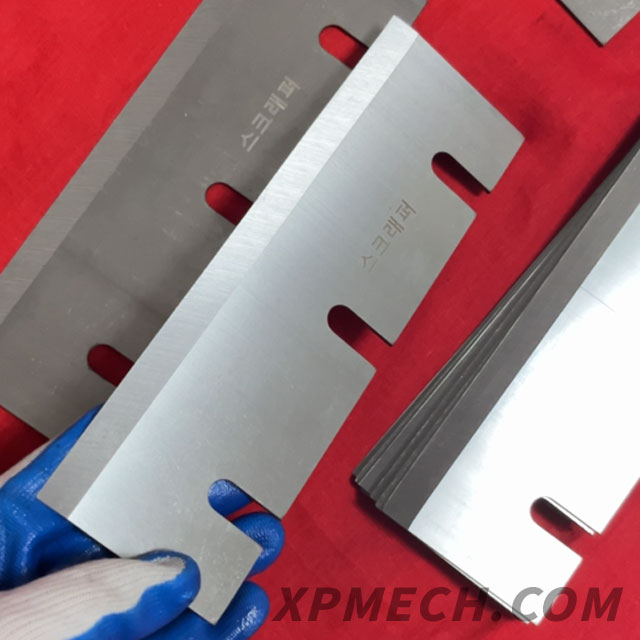
- Slicing Blades
Slicing blades are one of the most common types of blades in food processing. Their blades are usually sharp and flat, primarily used for slicing various foods into thin slices. For example, in delicatessens, slicing blades can precisely cut meats such as ham and sausage into uniform thin slices, making them convenient for consumption and sale. In vegetable processing, vegetables like potatoes and cucumbers can also be sliced using slicing blades for making potato chips or salads. The design of slicing blades ensures uniform slice thickness, improving the quality and appearance of the processed food. - Shredding Blades
Shredding blades are used to cut food into shreds. They generally have multiple small blades that can quickly transform block or sliced food into shredded form. In Chinese cooking, shredding blades are often used to process vegetables such as carrots and cabbage, cutting them into shreds for stir-frying, fillings, etc. In the processing of some specialty foods, such as shredded potatoes and vermicelli, shredding blades also play a key role. The shredded food produced is uniform in thickness, which facilitates even heating and seasoning during cooking. - Dicing Blades
Dicing blades are used when food needs to be cut into cubes. The blades of this type are usually thicker and can withstand greater pressure. For some harder foods, such as cheese and bread, dicing blades can easily cut them into appropriately sized cubes. In fruit processing, dicing blades can also be used to cut fruits such as watermelon and apples into cubes for packaging and sale. The design of dicing blades ensures regular shape and consistent size of the cubes, improving the standardization of the food. - Crushing Blades
Crushing blades are mainly used for crushing food. They usually have multiple sharp blades and rotate at a high speed. When making jams and juices, crushing blades can break down fruits into small particles, allowing for better juice extraction and the creation of smooth jams. In feed processing, crushing blades can also grind grains and other raw materials into powder, facilitating digestion and absorption by animals. Crushing blades can grind food into different particle sizes according to different needs, meeting diverse processing requirements. - Sawing Blades
Sawing blades have serrated edges and are suitable for cutting harder, tougher foods such as bones and frozen meats. In the meat processing industry, sawing blades can cut through the bones of entire animals, facilitating subsequent cutting and processing. For frozen foods, sawing blades can cut more easily through the food due to the serrated edges, reducing resistance during the cutting process. - Pitting Blades
In fruit processing, pitting blades are indispensable tools. They are specifically used to remove the pits from fruits such as cherries, peaches, and plums. The design of pitting blades allows for precise removal of the pits while minimizing damage to the fruit flesh. This not only improves the efficiency of fruit processing but also ensures the integrity and quality of the fruit.
Different types of food blades play important roles in various stages of food processing. Each type has its unique characteristics and uses, meeting the processing needs of different foods and providing strong support for the development of the food industry.