

Causes of Wear in Slitting Machine Circular Blades
The abnormally fast wear rate of slitting machine blades during normal use can be due to several factors. Here are some common causes and their corresponding solutions:
Causes:
Blade Material: The material of the slitting machine blade significantly impacts wear. Different materials have varying degrees of durability; for example, hard materials like tungsten carbide and ceramics are more durable, while ordinary steel blades wear out more easily.
Operating Conditions: If the slitting machine blades are used in harsh environments or with improper operation, wear will be accelerated. For example, cutting materials that are too hard, have uneven density, or have surface defects such as pitting or seams will increase blade wear.
Sharpening Quality: The quality of sharpening depends on the materials and equipment used, the sharpening process specifications, and the skill level of the operator. Higher sharpening quality leads to a longer blade lifespan and better cutting quality. However, if the sharpening angle is too small, the strength and wear resistance of the blade will decrease, leading to faster wear.
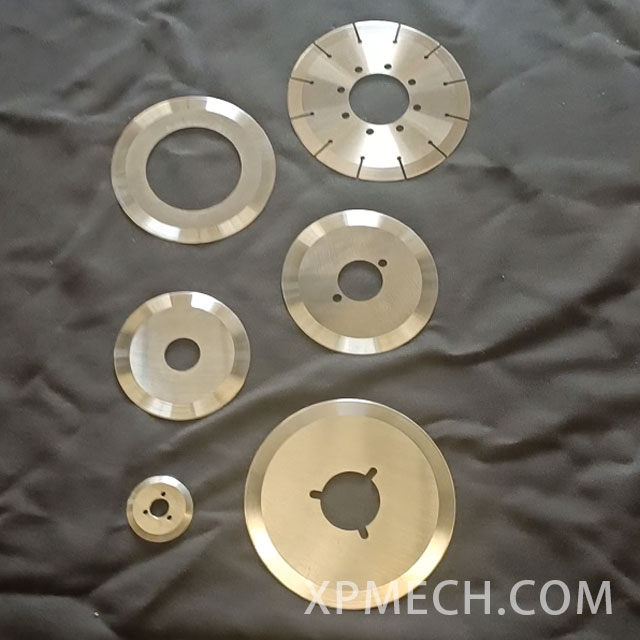
Solutions:
Select High-Quality Materials: Choose blade materials with better wear resistance, such as cemented carbide or polycrystalline diamond, to improve blade durability.
Optimize Cutting Parameters: Optimize cutting parameters, such as reducing cutting speed and feed rate, to reduce heat and mechanical impact during the cutting process, thereby reducing the blade wear rate.
Use Specialized Cutting Fluid: Use specialized cutting fluid to provide lubrication, cooling, and rust prevention, thus extending the blade’s lifespan. When choosing a cutting fluid, consider its process accuracy, environmental performance, and whether it meets the specific cutting process requirements.
Coating Treatment: Apply coating treatments to the blades, such as electroplating, thermal spraying, or other coating techniques, to improve the blade’s hardness, wear resistance, and chemical stability, thereby extending its lifespan.
Regular Maintenance and Upkeep: Regularly maintain and service the slitting machine blades, including cleaning, inspection, and replacing severely worn blades, to ensure they are in good working condition.
Training and Operating Procedures: Provide training and standardized operating procedures for operators to avoid improper operation that leads to accelerated blade wear.